
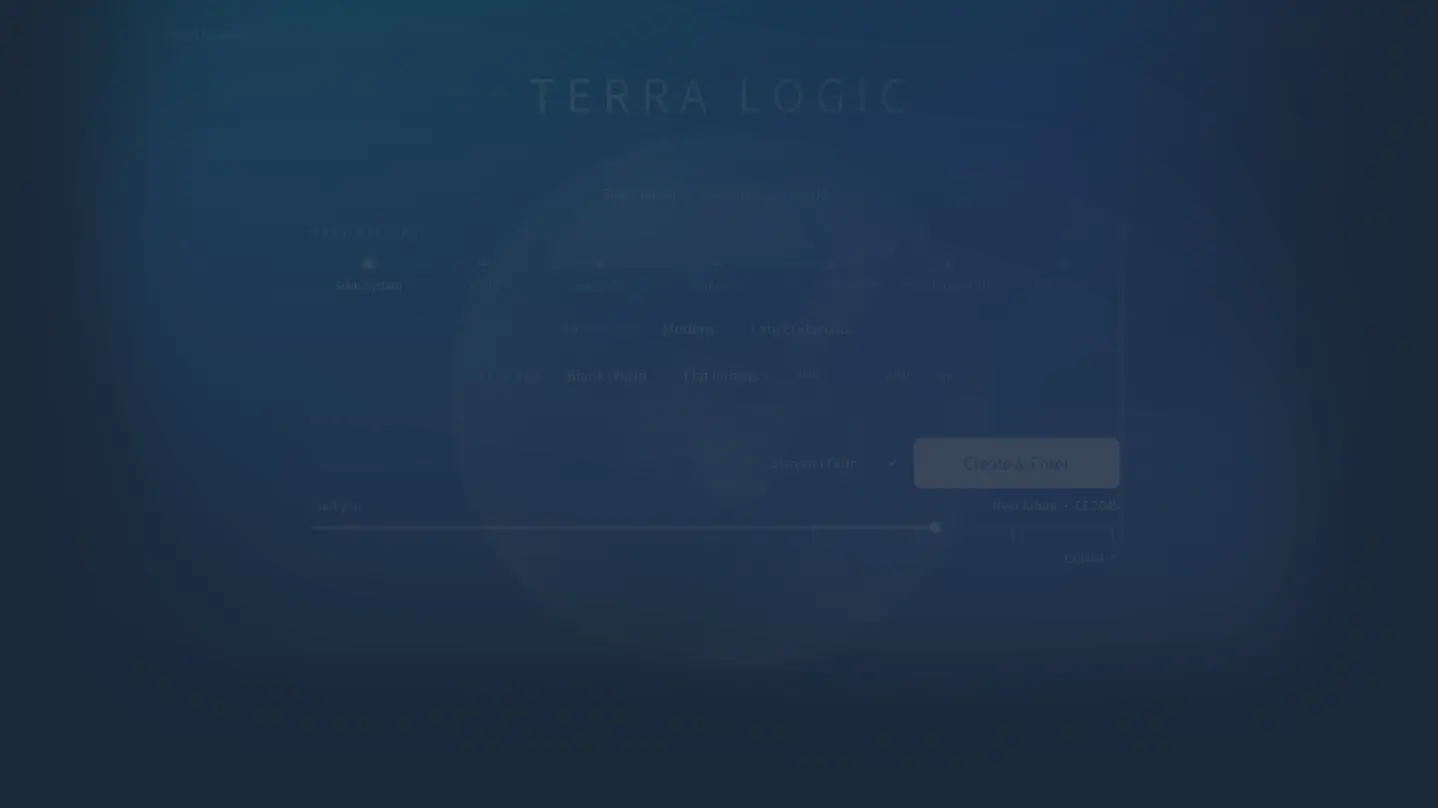
Draw on a planet and watch physics answer. A climate, ocean and erosion simulator you can edit with a brush — dry the Mediterranean, green the Sahara, stall the Atlantic conveyor. 38 scenarios across the Solar System, Cretaceous Earth and five real exoplanet systems.
One stroke levels Everest. One sunshade cools the equator.
Most sandboxes treat your brush as paint. Terra Logic hands it to physics. Every stroke feeds a live simulation of climate, ocean and erosion — you are not coloring a planet, you are asking it a question, and it answers with consequences.
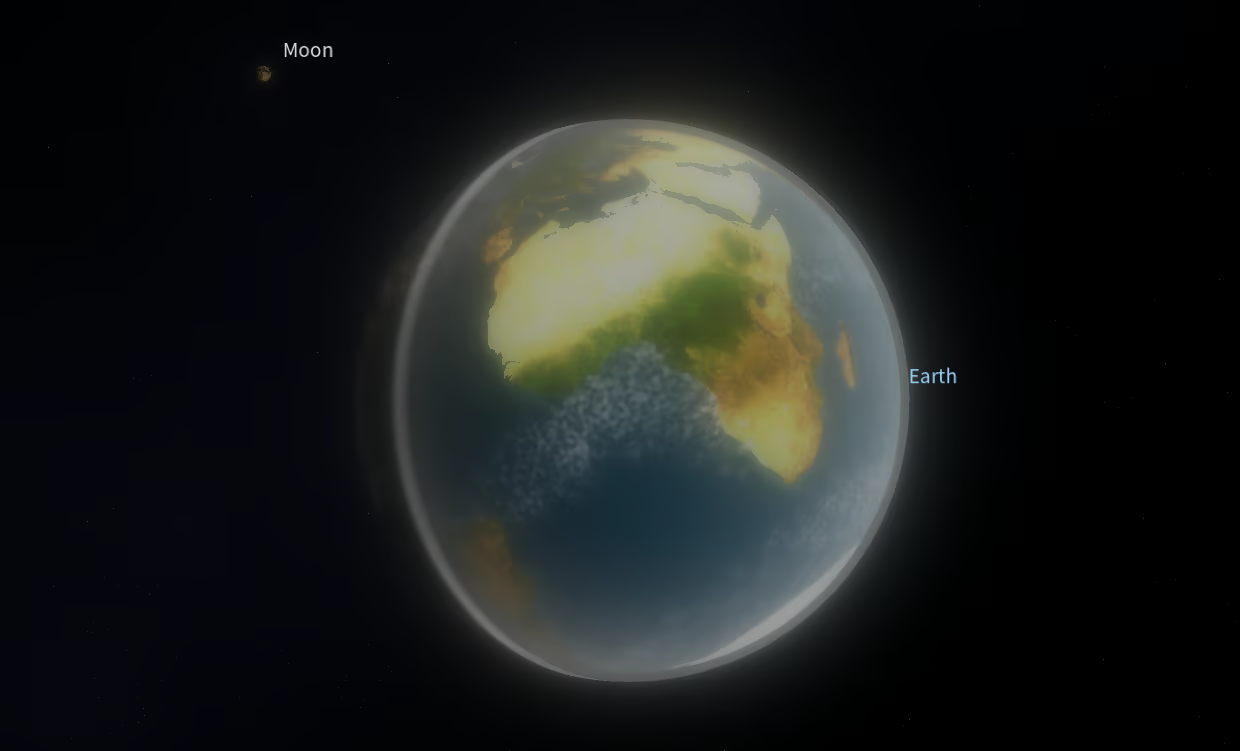
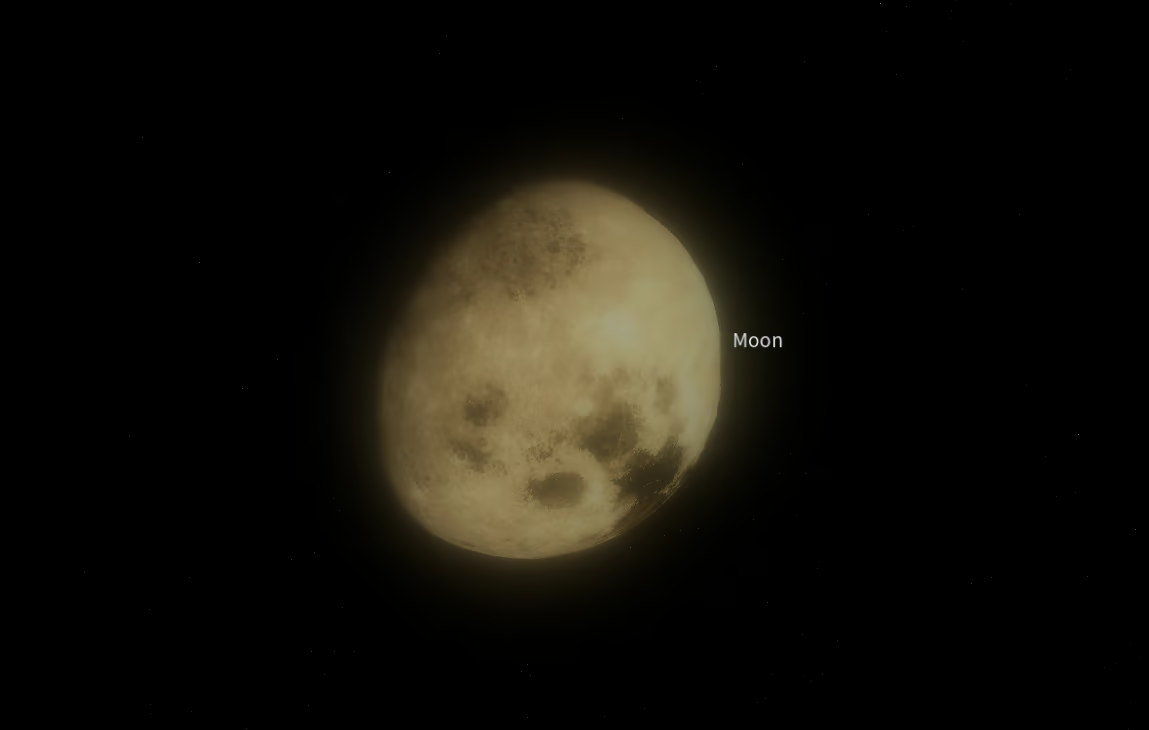
You draw. The planet answers.
Lower the Tibetan Plateau and the monsoon loses its wall — the rain belts redraw themselves
Dam Gibraltar and the Mediterranean dries into a salt desert over centuries; breach it and the Atlantic thunders back in
Dig the Sahara's depressions below sea level, let the ocean in, and watch green rim the new shores
Pour meltwater into the North Atlantic until the overturning circulation stalls and Europe goes cold — then try to bring it back. It won't come easily: the circulation remembers, and collapse has hysteresis
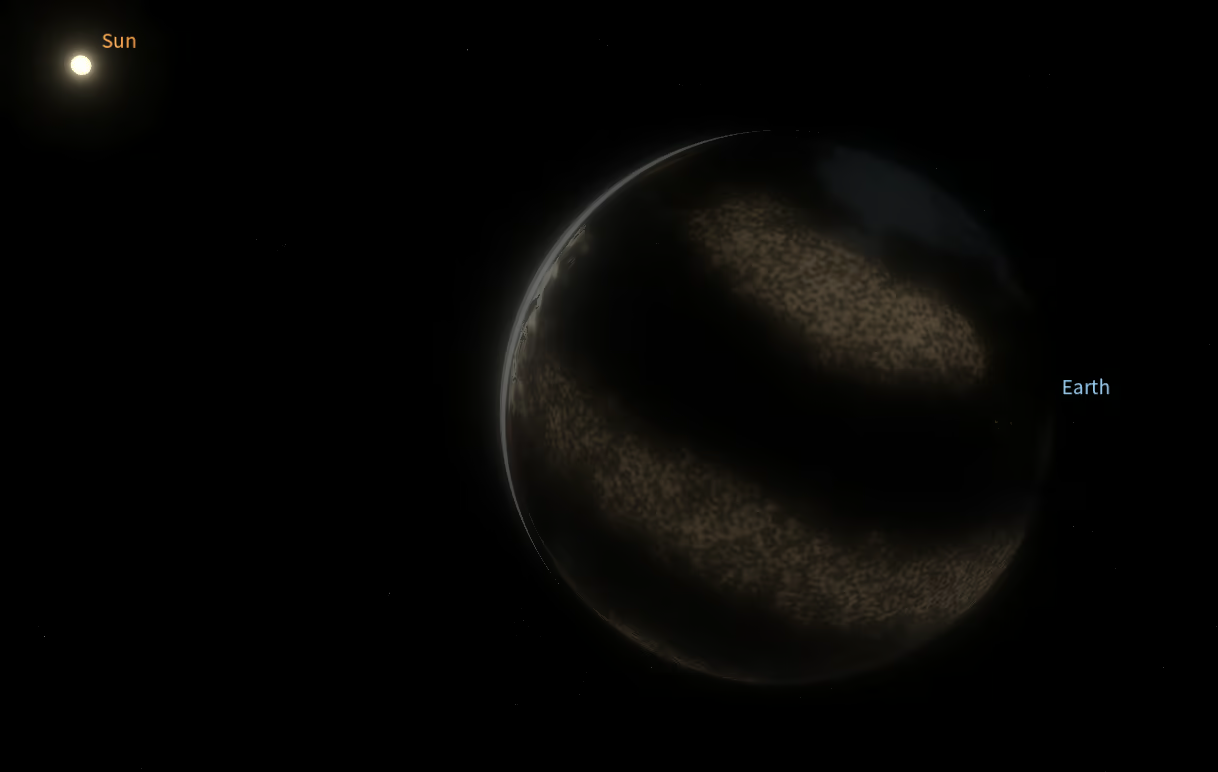
Not just "what happened" — "why"
Click anywhere on the planet. The causal probe breaks down that spot's temperature and rainfall: how much latitude gives, how much elevation takes, what the currents deliver, and exactly what your edits changed. The simulation is not a black box; every number can be audited.
38 scenarios
Green the Sahara. Reopen the Panama seaway. Breach Gibraltar and refill the Mediterranean. Save the thermohaline circulation. Light six lighthouses on the Moon. Every scenario is a planetary-engineering story worth retelling — Every scenario has a achievable solution; there are no dead ends..
6 star systems
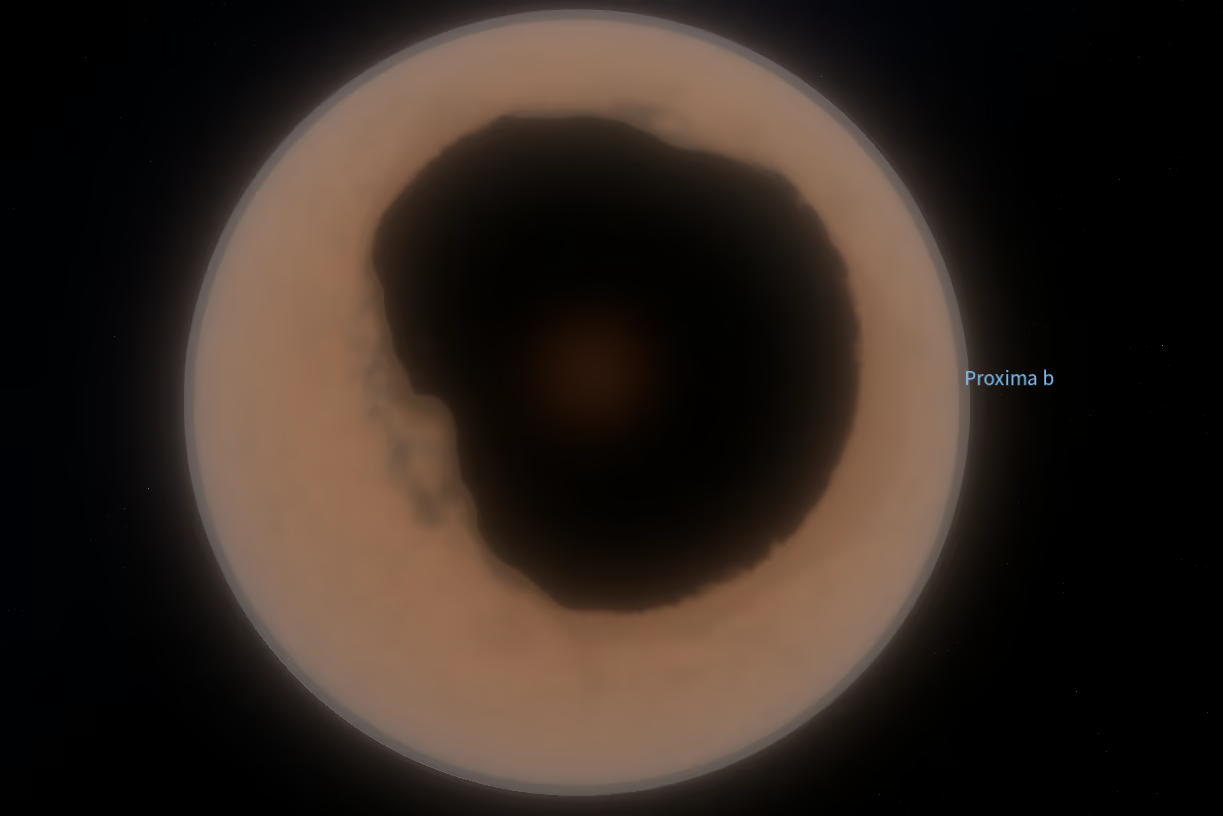
Beyond our own: TRAPPIST-1, Proxima Centauri, TOI-700, Kepler-452, K2-18 — orbits and stellar parameters taken from real observations, sources annotated. Tidally locked worlds run their own climate logic: a day side that never sleeps, a night side of ice, eyeball oceans along the terminator. And one more Earth — the Cretaceous, 90 million years ago, its continents placed by paleogeographic reconstruction.
A quiet workbench
No resource bars. No enemies. No countdown. A muted interface, a whispering narrator, Beethoven and Bach's Goldberg Variations in public-domain recordings. Seven languages: English, 简体中文, 繁體中文, 日本語, 한국어, Français, Deutsch.
Features
Real climate: an energy-balance model drives temperature, ice, rainfall and biomes
Three-layer ocean: wind-driven gyres, a thermohaline conveyor that can collapse — and be rescued — and sea-air coupling
Conserved water: it flows downhill, and inland seas fill or dry by physics
Real erosion: rivers incise, breach and re-route, carved into the heightfield
Causal probe and chronicle: every consequence can be questioned and replayed
38 scenarios plus free play on every body
The Moon, Mars, Cretaceous Earth and five real exoplanet systems
حداقل
- OS: Windows 10 64-bit (version 1909 or later)
- Processor: Intel Core i5-2400 / AMD FX-6300 or better (x86-64 with SSE4.2, 4 cores recommended)
- Memory: 8 GB RAM
- Graphics: Vulkan 1.0 compatible GPU with 4 GB VRAM (NVIDIA GTX 1650 / AMD RX 570)
- Storage: 2 GB available space
- Additional Notes: Requires a Vulkan 1.0 capable GPU. Integrated graphics are not officially supported.
پیشنهادی
- OS: Windows 11 64-bit
- Processor: Intel Core i5-10400 / AMD Ryzen 5 3600
- Memory: 16 GB RAM
- Graphics: NVIDIA GTX 1660 / AMD RX 5600 XT with 6 GB VRAM
- Additional Notes: Optional AI narration requires an internet connection and a user-supplied API key.