
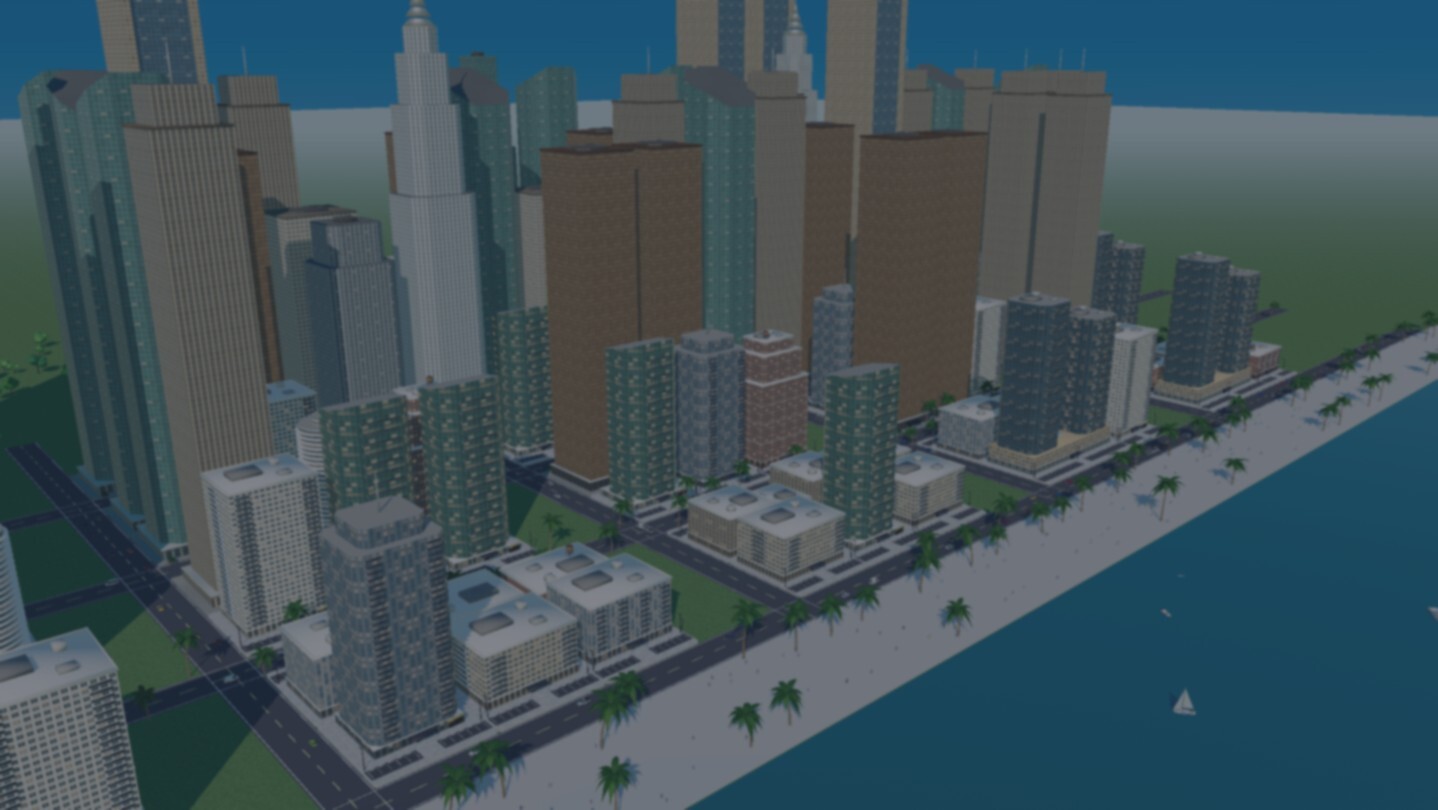
The City
وضعیت
بهزودیقیمت هنوز در استیم اعلام نشده
A take on a more realistic city simulation experience. Control everything from the price of services, tickets, to how the city operates and runs. It's an experience that will continue to receive daily and weekly updates while in early release.

Early Access
The City is in active development and gets regular updates throughout Early Access, with new features, improvements and fixes added as we go.
Press f8 in the game to send us a bug report or a feature request in seconds. The City is being built around what city builder players actually want, so you help decide what comes next. Thanks for playing, Mayor.
Build the city. Run the city. Answer to the city.
Nobody is a statistic. Click anyone in the city and see their life:
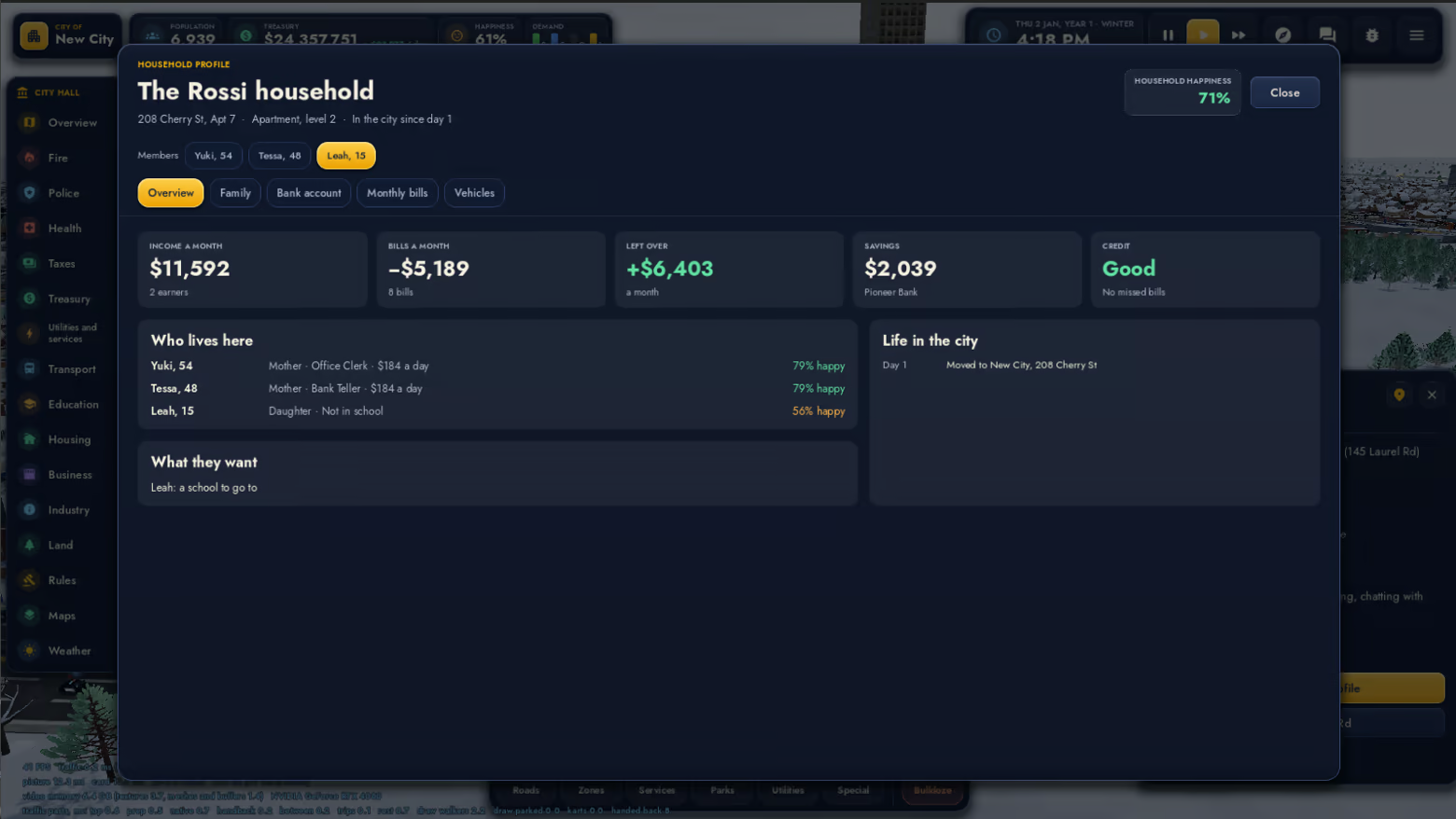
Household Profiles with the family, their bank account and statement, their monthly bills and their cars.
Real Jobs & Real Pay. People earn an hourly wage that depends on their education and their job, pay taxes, and spend it on rent, groceries, daycare, insurance, fuel and fines.
Real Reasons Happiness is made of around 70 things you can see and fix: a long commute, a missing grocery store, a factory next door, break-ins on the street, a dark road, high bills, being snowed in.
Ambitions. Unhappy people go after what would help them most: a job, a better job, school, or a nicer home. If the rent eats too much of their pay, they move somewhere cheaper, end up in a camp, or leave the city.
The mood of every resident adds up to the mood of the city, and that mood decides whether homes upgrade, businesses open and new people move in.
Every adult has a credit score from 300 to 850. It rises with a steady job, savings and bills paid on time, and it falls with missed payments, unemployment, jail time and a run-down neighborhood.
Five tiers, real rates: Excellent, Good, Fair, Poor and Bad, each with its own interest rate on car loans.
Cars come from your dealerships. Residents finance cars over 60 months. Bad credit means no new-car loan, and two missed payments means the car is repossessed.
Your city has a credit score too. Borrow up to $250,000 when you need it. Miss payments and future loans cost more.
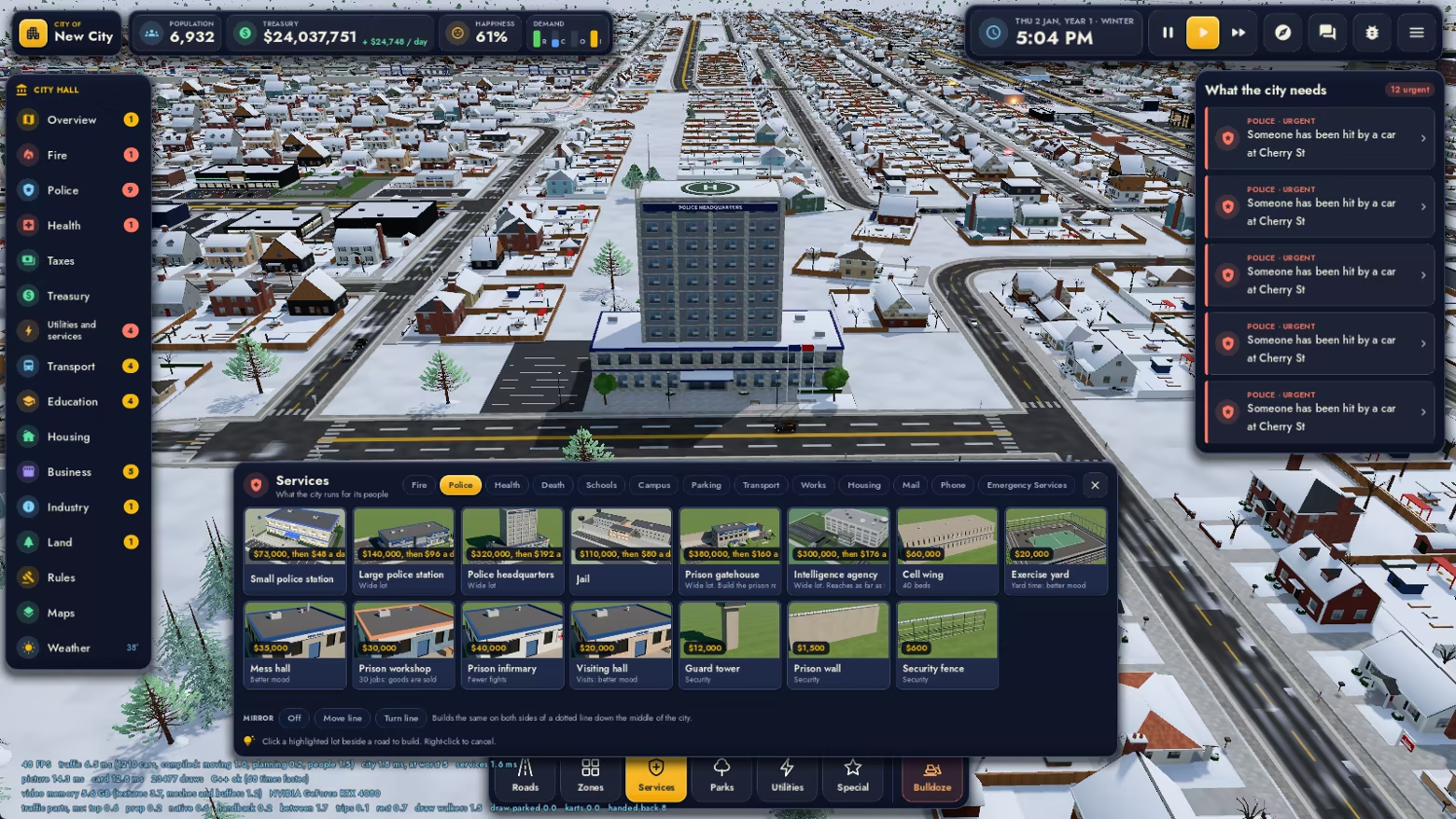
Six Police Buildings: small and large stations, a headquarters tower, a jail, a prison gatehouse and an intelligence agency. Place one and see exactly which streets it covers.
Patrols That Matter: Patrol cars drive the streets, and you choose their focus: balanced, traffic, neighborhoods or downtown. Hire extra officers, who train at the academy first.
13 traffic laws, your fines. Running a red light or a stop sign, speeding, illegal U-turns, ignoring lane arrows, jaywalking, parking in a bus stop and more. Turn each law on or off and set its fine. The fines are city income.
Pull-Overs: When a patrol car sees a violation, its lights go on, both cars pull over and the driver gets a ticket, or is arrested for the worst offenses. Drivers who were just ticketed drive more carefully.
Build a Whole Prison: Cell wings, exercise yard, mess hall, workshop, infirmary, visiting hall, guard towers and walls. Set the rules and the daily schedule. Run it badly and you get fights, riots and escapes, with inmates in orange running through your streets.
Crime You can See: Break-ins happen at night and take people's savings. Patrols can catch burglars in the act. Dark streets, unhappy homes and poor neighborhoods attract crime.
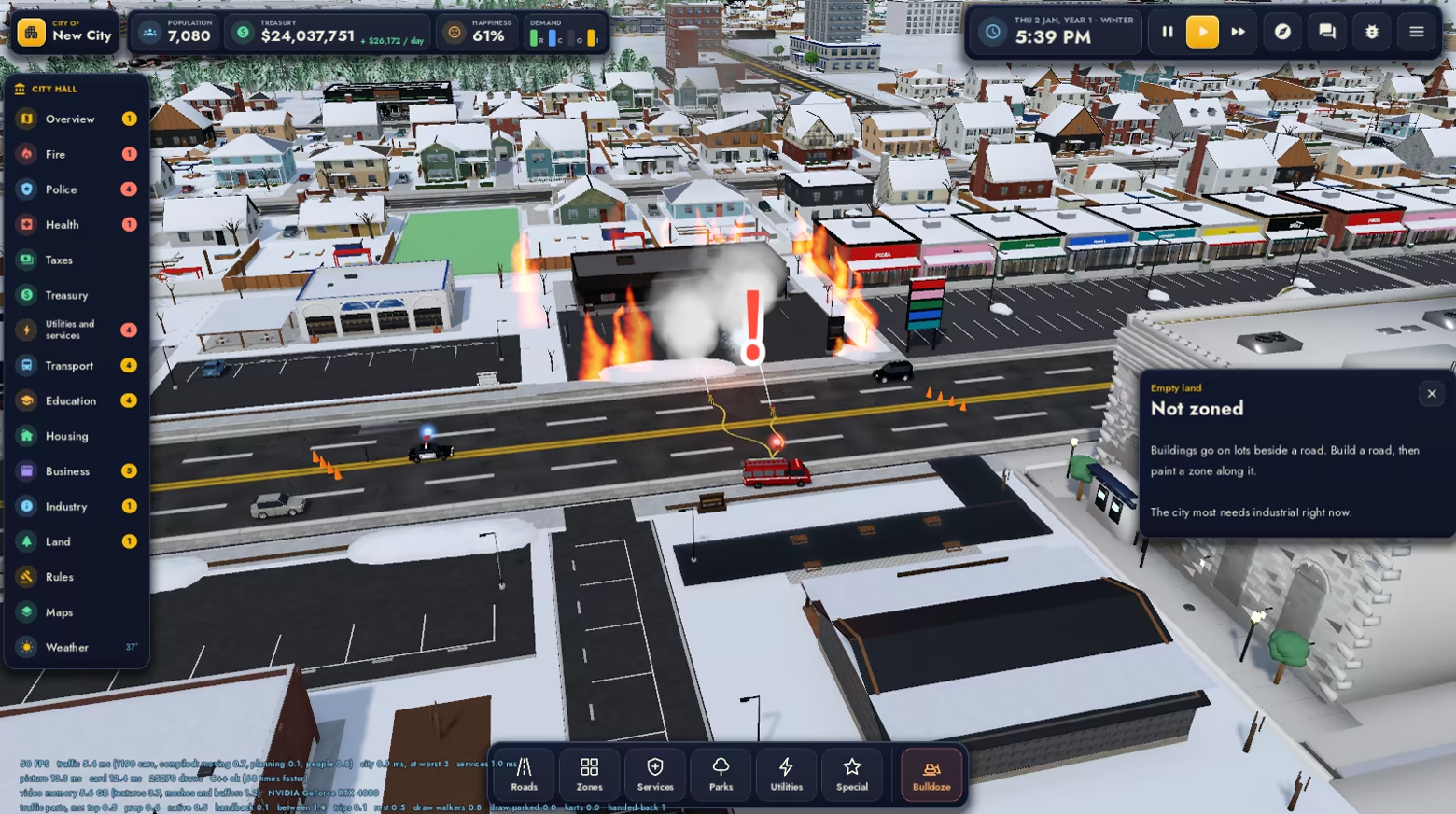
Seven Fire Stations, from a free volunteer station to a heavy rescue station with ladder trucks, a fire headquarters and a fire academy.
You Place The Hydrants: A fire engine's tank is empty after one house. With a hydrant nearby it goes straight to the next fire; without one, it drives home to refill.
Fires Spread: Left alone, a fire jumps to the buildings next door. Black smoke drifts across the city with the wind.
Crashes and Car Fires: Police, an ambulance and a tow truck come to every crash. The road stays blocked until it is cleared.
Health Care: clinics, urgent care, hospitals, ambulance stations, trauma centers and a medical center with a helipad.
Death Care: funeral homes, hearses, cemeteries and crematoriums. Plan too little and the dead wait in their homes.
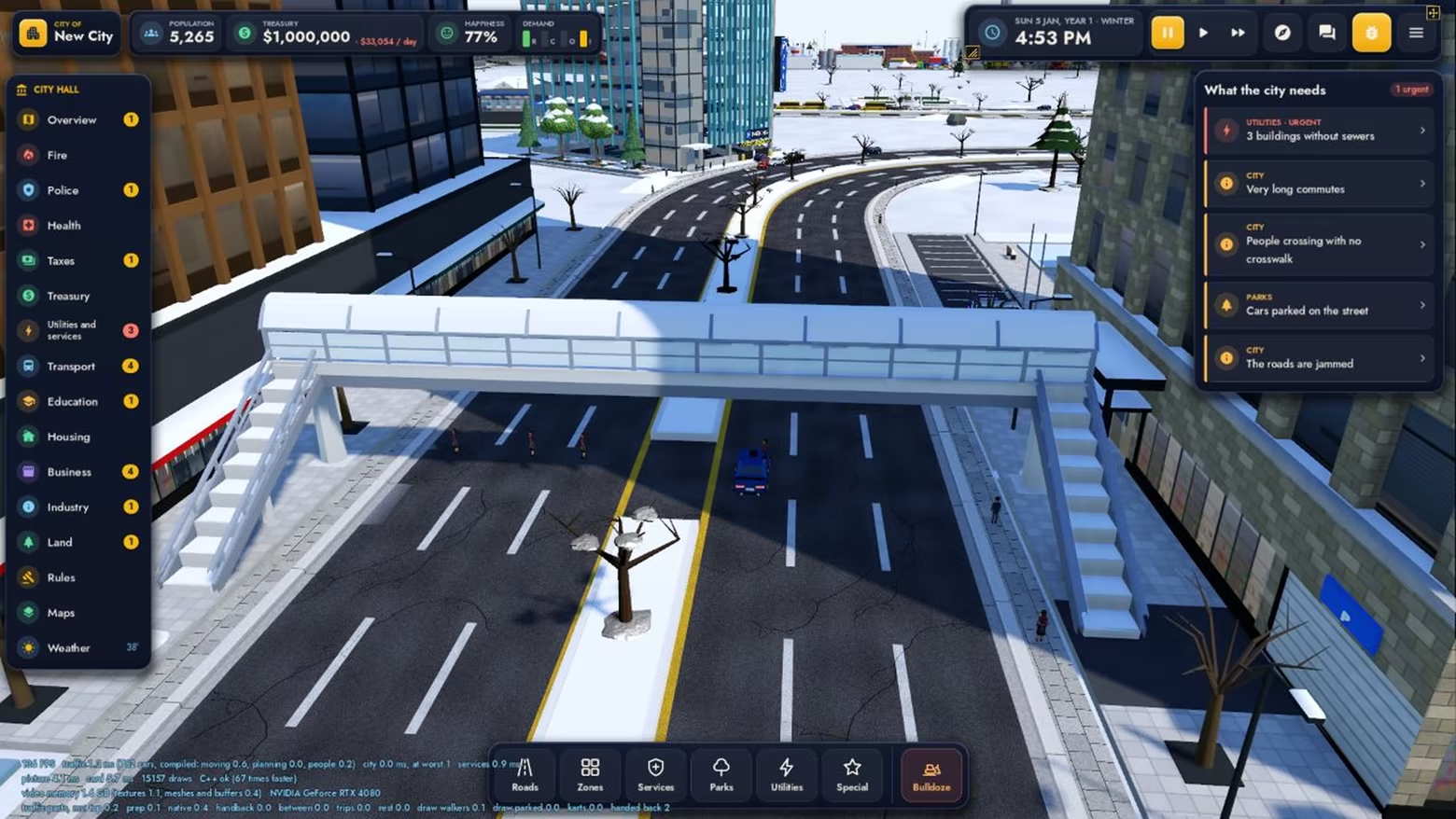
22 Road Types: from quiet streets to eight-lane highways, with medians, turn lanes, bus lanes and one-ways up to six lanes.
Draw Them Any Way You Like: straight, curved, freeform, circles and grids, on the ground or raised.
Ready-Made Junctions: interchanges (diamond, cloverleaf, trumpet, dumbbell and more) and roundabouts.
Real Rules of the Road: Drivers follow North American road rules: traffic lights, stop and yield signs, speed limits from 15 to 85 mph, lane arrows, turn bans and crosswalks.
Real (No, really) Parking: Cars park in lots, garages or on the street. They never vanish into a building. You set the parking prices.
Real Crashes: Accidents back up the road behind them until they are cleared.
Busses: draw your own routes stop by stop, and watch passengers get on and off. Park & ride and e-scooters give people other ways around.
Roads that Wear out: They go from new to cracked to potholed, and your road crews patch and rebuild them.

Four seasons, each with its own look, and real snow in winter.
Snow builds up on the roads, from flurries to full blizzards. Traffic wears it down.
Deep snow closes streets until a plow gets there, so build your public works depots and keep the plows moving.
Blizzards are forecast on the news. When one hits, it's a snow day: schools, parks and attractions close.
Snow makes crashes more likely, so roads need plowing.

Your residents need real places near home, not just a colored zone on a map. Let zoning fill them in, or place them yourself:
38 businesses you can place: grocery stores, banks, gyms, gas stations, car dealerships, electronics and appliance stores, department stores, a supercenter, truck stops, EV chargers, real estate offices, daycares and a huge furniture store.
Places to eat: pizzerias, diners, taquerias, sushi bars, drive-throughs with working lanes, a French bistro, and more. Residents have favorite cuisines and go out for them.
Watch what happens to a neighborhood that goes without.
Stadiums with your team. Build a baseball, soccer or arena stadium, name it and its team, and fill it on game night. Set the ticket price; the crowd depends on your city's size and what you charge.
Attractions. an amusement park, race track, go-kart track (visitors really drive the karts), cinemas, museums, a hotel, an observation tower, arcades and more. Each sells tickets at the price you choose.
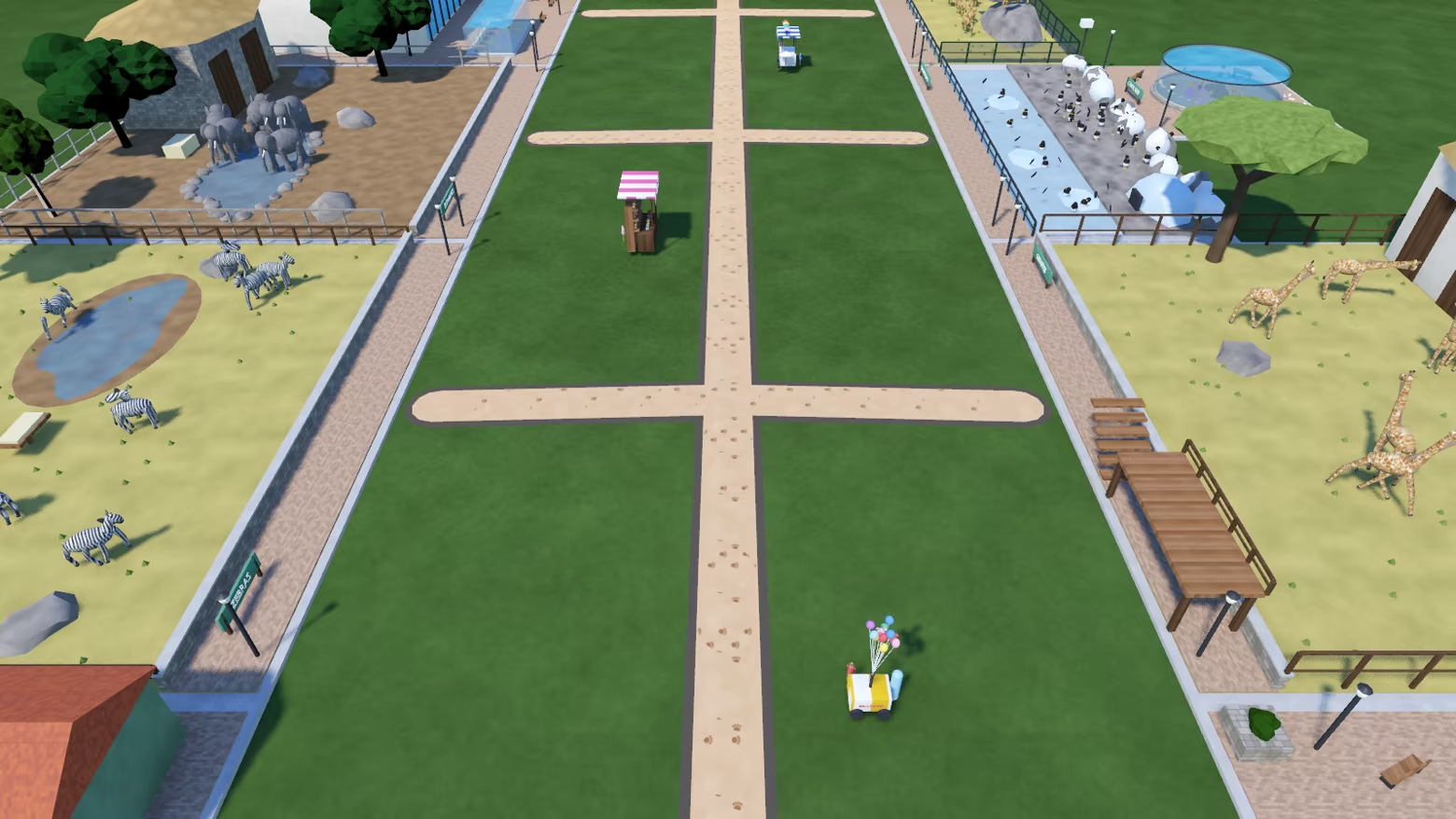
A fully modular Zoo. Lay out an entrance, exhibits, an aquarium and paths. Animals walk, swim, fly and climb, and the more species you have, the more visitors you get.
21 Parks Residents picnic, walk their dogs, jog, play chess, feed the ducks and skate.
Holidays: Halloween, Thanksgiving, Christmas and the 4th of July, with decorations, trick-or-treaters, carolers and fireworks.
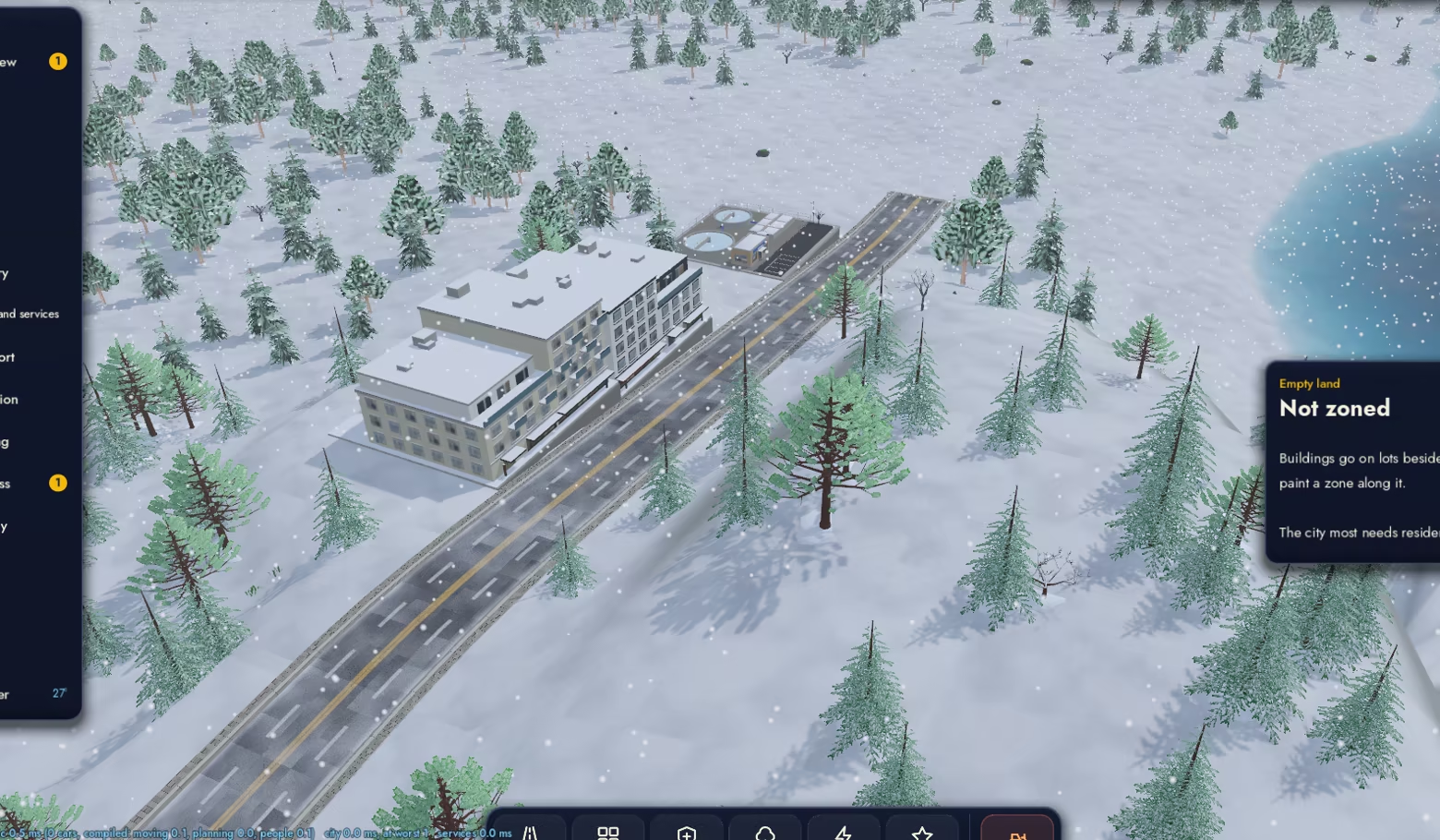
Free placement. Curve your roads and put buildings where you want them, not where a grid tells you.
Zones with depth. Residential, commercial, office, industrial and mixed zones (shops with homes above, offices over shops), in low, medium and high density.
Homes that grow. Houses are rebuilt bigger, through five grades, as a happy family saves up.
Watch it go up. Buildings are built on site, with cranes and materials, before they open.
Tools that save time: move buildings instead of bulldozing them, mirror one side of the city onto the other, undo, raise and flatten the land, and expand buildings where they stand.
Estates: up to five mansions, villas and a Mayor's house for the very rich.

Forestry: mark trees, and the timber mill's crews fell them, haul the logs and replant.
Quarries: dig a real pit, layer by layer, with excavators, haul trucks and a rock crusher.
Farms: wheat, corn, vegetables, orchards, pasture and greenhouses, worked by tractors and combines.
Resources: stone, coal, oil and natural gas deposits differ in every city. Mines, oil fields and a refinery, which halves the price of gas.
Supply chains: 13 kinds of industry. Make their supplies in the city or import them, and sell the surplus to other cities

Taxes and budgets: set residential, commercial, office and industrial taxes, see a detailed budget, and fund police, fire, education, health and utilities from 50% to 150%.
Price everything: power, water, sewer, bus fares, tuition, parking, attractions.
14 district policies: rent control, neighborhood watch, quiet nights, free smoke alarms, recycling, street parking meters and more. Paint your own districts.
Utilities: wind, solar, coal, natural gas and nuclear power; water towers and pumping stations; sewage treatment; trash pickup by real garbage trucks; mail, phone and internet. Water mains break and overloaded grids brown out until your crews fix them.
Education: elementary, middle and high schools, school buses and school zones, a community college, and a modular university you build piece by piece. Educated workers fill your offices.
Hard problems: homelessness, run-down neighborhoods that spread, and crime. Shelters, city housing and your police policy decide how you handle them.

Seven radio stations: with original music. Two of them, The Block (hip hop) and Trance FM, have their own DJs, who talk between songs and read the city's news in their own style.
A spoken city advisor who warns you about fires, crashes, blizzards and anything going wrong.
City Radio news made from what is really happening in your city.
Walk and drive. Press V to walk your streets at eye level, and get into any car to drive it.
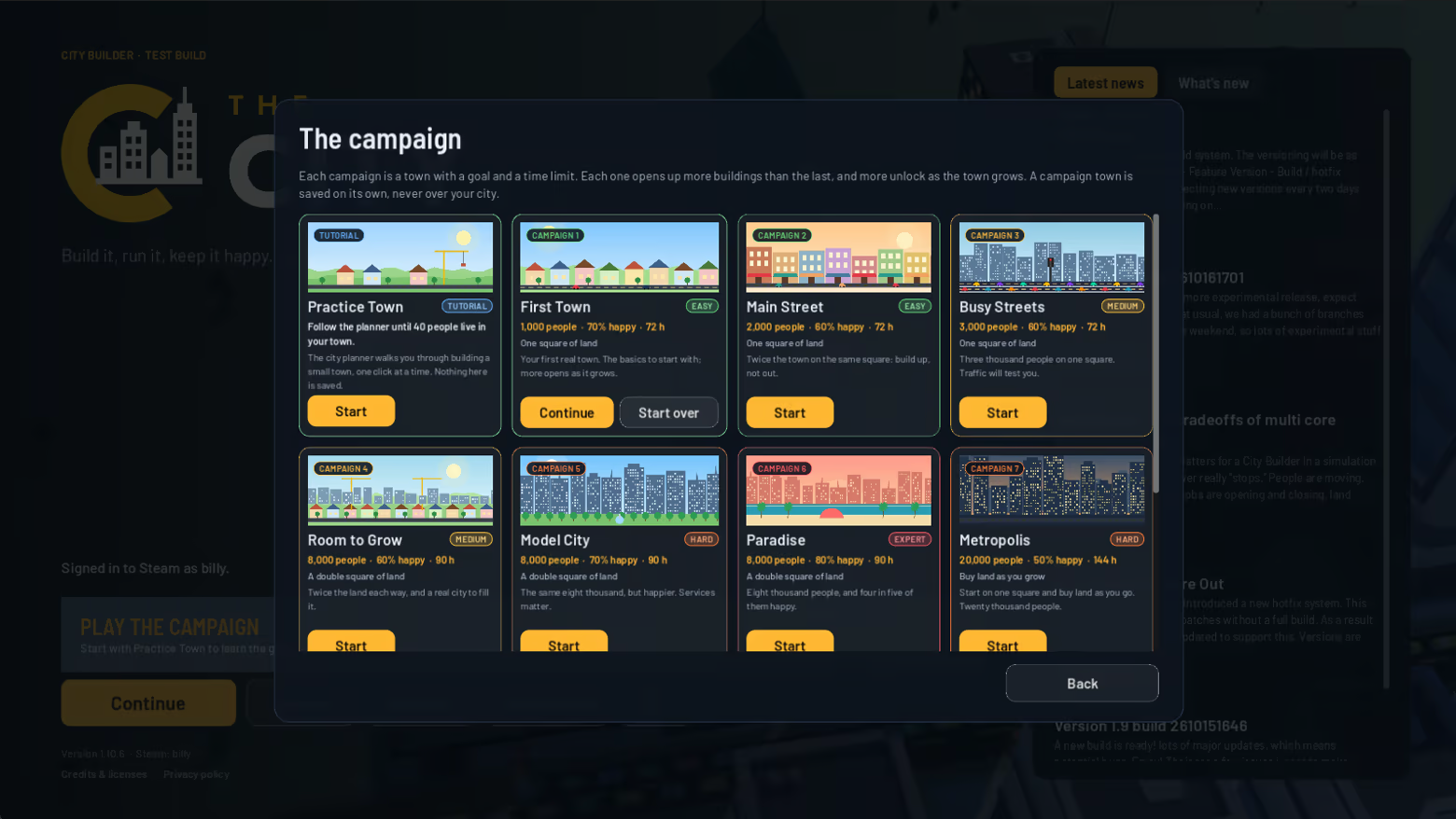
Campaign: ten challenges, from Practice Town to The City, each with a population and happiness goal against the clock. Buildings unlock as your city grows.
Sandbox mode: everyone is happy, with no crime, fires or deaths. Just build.
Build together: invite a friend through Steam. One player hosts and the other joins, and you build side by side, with chat. Multiplayer is limited to two players for now; we plan to expand it during Early Access.
24 Steam achievements.

حداقل
- OS: Windows 10
- Processor: quad-core Intel Core i5 or AMD Ryzen 3
- Memory: 8 GB RAM
- Graphics: a card that supports Vulkan with 2 GB of video memory, such as NVIDIA GTX 1050 or AMD RX 560
- Storage: 1 GB available space
پیشنهادی
- OS: Windows 10 or 11 (64-bit)
- Processor: six-core Intel Core i5 or AMD Ryzen 5
- Memory: 16 GB RAM
- Graphics: NVIDIA GTX 1660 or AMD RX 5600 XT, with 6 GB of video memory
- DirectX: Version 12
- Storage: 1 GB available space