
Build and launch your own missiles in a physics-driven engineering sandbox. Experiment with airframes, fins, and propulsion, analyze flight data, and refine your designs for greater speed, altitude, and stability. Put every creation to the test against real-world physics.
Build your own missiles and put them to the test in a physics-driven engineering sandbox. Design, launch, analyze, and refine your creations as you chase greater speed, higher altitude, and more stable flight. Every launch is an experiment. Every result is a reason to head back to the drawing board.
BUILD YOUR DESIGN
Choose your missile’s body, nose cone, fins, and propulsion. Experiment with different configurations and discover how shape, mass, and thrust affect performance. A design that looks fast still has to prove itself in the air.
PUT REAL PHYSICS TO THE TEST
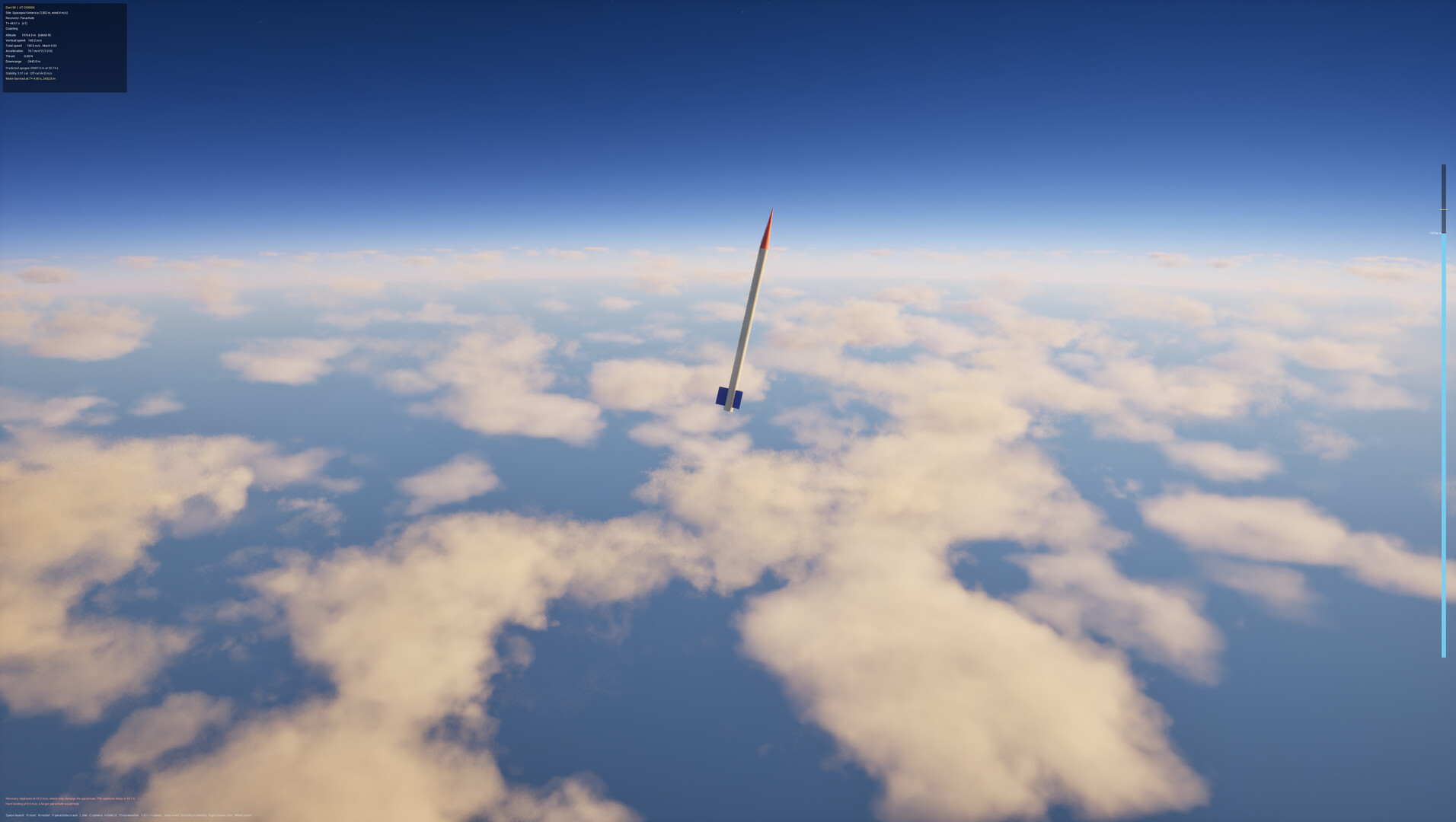
Launch into a full six-degrees-of-freedom flight simulation that models both movement and rotation through three-dimensional space. Aerodynamic forces, gravity, and changing mass shape your flight from ignition through burnout and beyond.
Watch your design climb cleanly, drift off course, or lose stability as the physics play out.
READ THE RESULTS
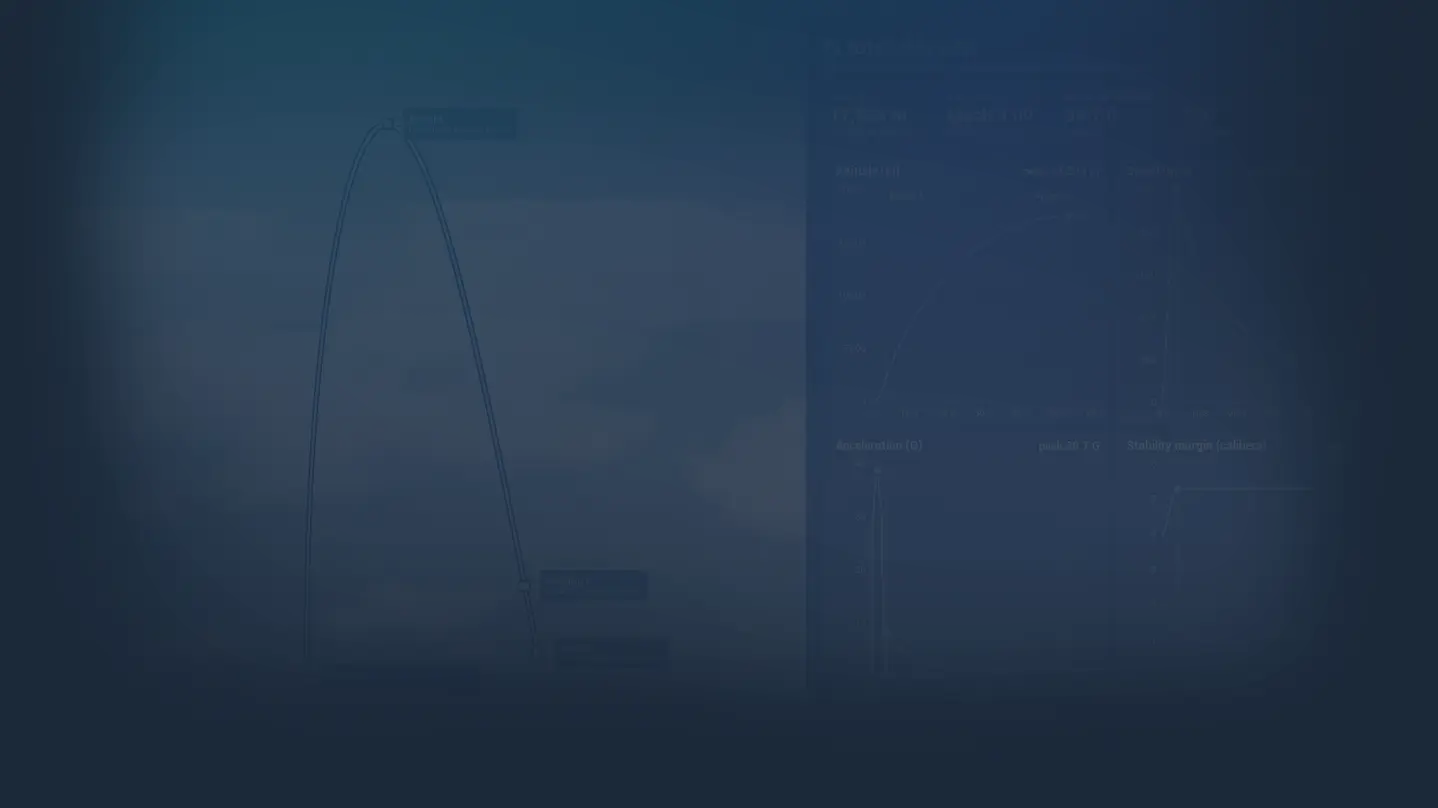
Follow your missile’s trajectory and examine flight data to understand what happened. Track speed, altitude, acceleration, and stability throughout the flight. Find out where your design performed well and where it needs another pass.
TAKE ON THE ATMOSPHERE
Test your creations in different wind and atmospheric conditions using real-world weather data. See how the same design behaves when the environment changes.
REFINE. RELAUNCH. REPEAT.
Adjust your design, test a new configuration, and see what changes. Pursue a personal performance goal or experiment to understand what makes a missile fly. The next launch starts with what you learned from the last one.
Key Features
Missile building with configurable airframes, fins, and propulsion.
Physics-driven flight powered by a six-degrees-of-freedom simulation.
Three-dimensional trajectories and detailed flight telemetry.
Wind and atmospheric modeling using real-world weather data.
Open-ended experimentation focused on building, testing, and improving.
حداقل
- OS: Windows 10 64-bit (version 22H2) or Windows 11
- Processor: 4 cores / 8 threads, x64: Intel Core i5-8400 or AMD Ryzen 5 2600
- Memory: 8 GB RAM
- Graphics: DirectX 12 card with Shader Model 6 and 6 GB VRAM: NVIDIA GTX 1660 / RTX 2060, AMD RX 5600 XT, or Intel Arc A580
- DirectX: Version 12
- Storage: 10 GB available space
- Sound Card: Any DirectX-compatible sound device (standard onboard audio is fine)
پیشنهادی
- OS: macOS 14 Sonoma or later
- Processor: Apple Silicon (M1 or newer)
- Memory: 16 GB RAM
- Graphics: Apple M1 integrated GPU or better (Metal 3)
- Storage: 10 GB available space
- Sound Card: Built-in audio